Single Tooth Implant Cost: What’s Included and What’s Not?
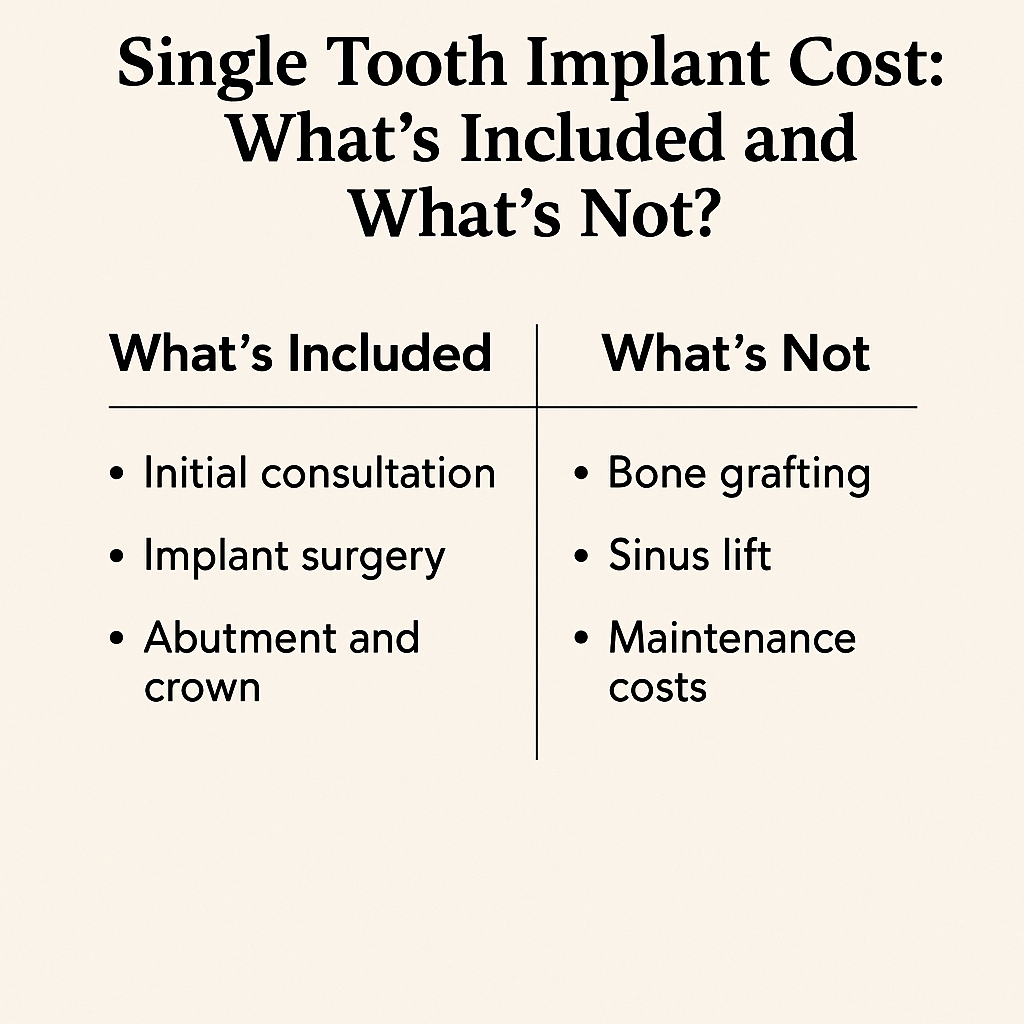
Single Tooth Implant Cost: What’s Included and What’s Not?
Replacing a missing tooth with a dental implant is widely considered one of the most effective and long-lasting solutions in modern dentistry. However, one of the most common questions patients ask is: How much does a single tooth implant really cost, and what does that price include?
In the United States, the cost of a single tooth implant can vary significantly depending on multiple factors, including the materials used, the complexity of the procedure, and the experience of the dental professional. This article provides a comprehensive, educational breakdown of what is included in single tooth implant costs, what is often not included, and why prices can differ so widely from one patient to another.
Disclaimer: This content is for informational purposes only and does not replace professional medical or dental advice. Patients should always consult a licensed dental professional for diagnosis and treatment planning.
What Is a Single Tooth Dental Implant?
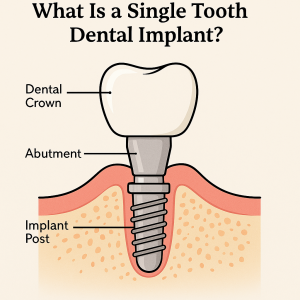
A single tooth dental implant is a fixed tooth replacement option designed to replace one missing tooth without affecting neighboring teeth. Unlike dental bridges, which rely on adjacent teeth for support, a dental implant is anchored directly into the jawbone.
A complete single tooth implant typically consists of three main components:
- The implant post: A titanium or zirconia screw placed into the jawbone
- The abutment: A connector that attaches the implant to the crown
- The dental crown: The visible, tooth-shaped restoration
Each of these components contributes to the overall cost of treatment.
Average Cost of a Single Tooth Implant in the USA
In the United States, the average cost of a single tooth implant generally ranges between:
- $3,000 to $5,500 per tooth (total treatment cost)
This range reflects a fully completed implant restoration, not just the implant surgery alone. However, it is important to understand that this is an estimate, and actual costs may be higher or lower depending on individual circumstances.
Many patients are surprised to learn that the quoted price can differ dramatically from one dental office to another. This variation exists because there is no single, standardized fee for implant dentistry in the U.S.
What’s Typically Included in the Cost of a Single Tooth Implant?
When evaluating implant pricing, it is critical to understand what services are included in the quoted fee. A transparent treatment plan should clearly outline each component.
1. Initial Consultation and Treatment Planning
Most implant cases begin with a comprehensive consultation. This appointment may include:
- Clinical oral examination
- Review of medical and dental history
- Discussion of treatment options
In some practices, the consultation fee is included in the total cost, while in others it may be charged separately.
2. Diagnostic Imaging (X-rays or 3D CBCT Scans)
Advanced imaging is essential for safe implant placement. Many providers use cone beam computed tomography (CBCT) scans to evaluate bone volume, nerve position, and sinus anatomy.
Depending on the clinic, imaging costs may be:
- Included in the implant package, or
- Billed separately as an additional diagnostic fee
3. Implant Surgery (Implant Placement)
This stage involves surgically placing the implant post into the jawbone. The cost of implant surgery typically includes:
- Surgical procedure
- Local anesthesia
- Surgical supplies and sterile environment
The type of implant material used (most commonly titanium) and the complexity of placement can influence this portion of the cost.
4. Healing Period and Follow-Up Visits
After implant placement, a healing phase known as osseointegration allows the implant to fuse with the jawbone. Follow-up visits during this phase are often included in comprehensive pricing.
Healing time typically ranges from 3 to 6 months, depending on individual bone health.
5. Abutment Placement
The abutment connects the implant post to the dental crown. Some providers include the abutment in the total cost, while others itemize it separately.
Abutments may be prefabricated or custom-made, which can affect pricing.
6. Custom Dental Crown
The dental crown is the visible part of the implant and is custom-designed to match the color, shape, and size of surrounding teeth.
Crown materials commonly include:
- Porcelain-fused-to-metal (PFM)
- All-ceramic or porcelain
- Zirconia
High-quality materials and custom lab work contribute significantly to the final cost.
Why Implant Prices Can Vary So Much
Two patients receiving a single tooth implant may receive very different price quotes. This variation is influenced by several key factors, including geographic location, provider expertise, and case complexity.
Understanding these differences helps patients make informed decisions rather than focusing solely on the lowest price.
What’s NOT Included in the Cost of a Single Tooth Implant?
While many dental clinics advertise a single price for dental implants, not all services are always included in the initial quote. Understanding what is not typically included can help patients avoid unexpected expenses and make more informed treatment decisions.
It is important to carefully review treatment plans and ask for a detailed cost breakdown before proceeding with implant therapy.
1. Tooth Extraction (If Required)
If the damaged or decayed tooth is still present, it may need to be removed before implant placement. Tooth extraction costs are often not included in standard implant pricing.
Extraction costs can vary depending on:
- Simple vs surgical extraction
- Impacted teeth
- Condition of surrounding bone and gum tissue
In some cases, extraction and implant placement can be performed on the same day, while in others a healing period is required.
2. Bone Grafting Procedures
A sufficient amount of healthy jawbone is essential for implant stability. If bone loss has occurred due to tooth loss, gum disease, or trauma, a bone graft may be necessary.
Bone grafting is frequently not included in the base cost of a single tooth implant.
Common bone grafting materials include:
- Autograft (patient’s own bone)
- Allograft (donor bone)
- Xenograft (animal-derived bone)
- Synthetic bone substitutes
The need for bone grafting can add several hundred to several thousand dollars to the overall cost.
3. Sinus Lift Surgery (Upper Jaw Implants)
For implants placed in the upper back jaw, particularly near the sinus cavity, a sinus lift procedure may be required to create sufficient bone height.
This advanced surgical procedure is usually billed separately and is not included in standard implant pricing.
Sinus lift costs depend on the complexity of the procedure and the materials used.
4. Sedation and Advanced Anesthesia
Basic local anesthesia is often included in implant surgery. However, additional sedation options are commonly offered at an extra cost.
These may include:
- Oral sedation
- IV sedation
- General anesthesia
Sedation fees vary based on duration, medications used, and whether an anesthesiologist is involved.
5. Temporary Restorations
In some cases, patients may require a temporary tooth replacement while the implant heals. Temporary restorations are not always included in the base price.
Temporary options may involve:
- Removable partial dentures
- Temporary crowns
These solutions provide aesthetic and functional benefits during the healing phase but may incur additional costs.
6. Post-Surgical Medications
Prescription medications, such as antibiotics or pain management drugs, are typically not included in implant pricing.
Medication costs depend on individual prescriptions and pharmacy pricing.
7. Management of Complications
Although dental implants have a high success rate, complications can occur. Treatment of complications is often not covered in the initial implant fee unless explicitly stated.
Examples include:
- Implant failure or loosening
- Infection management
- Additional corrective procedures
Patients should clarify whether warranty policies or revision coverage are offered.
How Case Complexity Impacts Single Tooth Implant Costs
No two implant cases are exactly alike. Case complexity plays a significant role in determining the final cost of treatment.
Bone Quality and Quantity
Patients with dense, healthy bone often require fewer additional procedures, resulting in lower overall costs. Reduced bone volume may necessitate grafting, staged surgeries, or extended healing times.
Location of the Missing Tooth
Front teeth often require higher aesthetic standards, custom shading, and advanced lab work, which can increase crown costs.
Back teeth, while less visible, endure higher biting forces and may require reinforced materials.
Overall Oral and Systemic Health
Conditions such as gum disease, diabetes, or smoking habits may affect treatment planning, healing time, and follow-up care requirements.
Why Lower Prices Are Not Always Better
Cost is an important factor for many patients, but selecting an implant provider based solely on price can be risky.
Lower-cost implant treatments may involve:
- Lower-quality materials
- Limited diagnostic imaging
- Minimal follow-up care
- Outsourced laboratory work with less customization
Patients are encouraged to evaluate the overall value, provider experience, and long-term prognosis rather than focusing only on initial costs.
Does Dental Insurance Cover the Cost of a Single Tooth Implant?
One of the most common financial concerns among patients in the United States is whether dental insurance helps cover the cost of a single tooth implant. In most cases, traditional dental insurance plans provide limited or partial coverage for implant-related procedures.
Insurance policies may cover certain components of treatment, such as:
- Tooth extraction
- Diagnostic imaging
- Portions of the dental crown
However, the implant post itself is often categorized as a cosmetic or elective procedure, which may limit reimbursement.
Coverage varies significantly between insurance providers and plans. Patients are encouraged to review their policy details carefully and consult their insurance coordinator before beginning treatment.
Financing Options for Single Tooth Implants
To make implant treatment more accessible, many dental practices in the U.S. offer financing options. These options allow patients to spread costs over time rather than paying the full amount upfront.
Common financing solutions include:
- In-house payment plans
- Third-party healthcare financing companies
- Health savings accounts (HSA)
- Flexible spending accounts (FSA)
Patients should review interest rates, repayment terms, and eligibility requirements before committing to a financing plan.
Single Tooth Implant Cost vs Other Tooth Replacement Options
When evaluating treatment options, cost comparisons can provide valuable perspective. While dental implants typically have a higher upfront cost, they may offer long-term advantages.
Dental Implants vs Dental Bridges
Dental bridges often have a lower initial cost than implants. However, bridges may require replacement every 7 to 10 years and involve altering adjacent teeth.
Dental Implants vs Removable Partial Dentures
Removable partial dentures are generally the most affordable option initially, but they may require frequent adjustments, replacements, and ongoing maintenance.
Over time, the cumulative costs of alternative treatments can approach or exceed the cost of a single implant.
Long-Term Value and Durability Considerations
Dental implants are designed to function as a long-term tooth replacement solution. With proper care, the implant post may last for decades.
Factors that influence longevity include:
- Oral hygiene habits
- Regular dental checkups
- Avoidance of smoking
- Overall health status
While the crown may require replacement over time due to wear, the underlying implant often remains stable.
Frequently Asked Questions (FAQ)
Is a single tooth implant worth the cost?
For many patients, a single tooth implant offers functional stability, natural appearance, and long-term value. However, suitability depends on individual oral health and financial considerations.
How long does the entire implant process take?
The full treatment process typically takes several months, including healing and crown placement. Timelines vary based on case complexity.
Can implant costs increase after treatment begins?
Additional procedures, such as bone grafting or extended follow-up care, may increase total costs if not included in the original treatment plan.
Are dental implants safe?
Dental implants have a high success rate when performed by qualified professionals. As with any surgical procedure, risks exist and should be discussed with a dentist.
Key Questions to Ask Before Starting Implant Treatment
Before committing to treatment, patients may benefit from asking their provider the following questions:
- What services are included in the quoted price?
- Are diagnostic imaging and follow-up visits included?
- What additional procedures might be required?
- Is there a warranty or revision policy?
Final Thoughts on Single Tooth Implant Costs
The cost of a single tooth implant reflects more than just the surgical procedure. It includes advanced diagnostics, high-quality materials, professional expertise, and long-term treatment planning.
Understanding what is included—and what is not—empowers patients to make informed decisions based on value, safety, and long-term outcomes rather than price alone.
Final Disclaimer: This article is intended for educational purposes only and should not be considered medical or dental advice. Always consult a licensed dental professional for personalized treatment recommendations.
According to the American Academy of Implant Dentistry (AAID), dental implants are considered a reliable long-term tooth replacement option when placed by qualified professionals.
Learn more at
American Academy of Implant Dentistry
.
The American Dental Association (ADA) provides general information about dental implant procedures and oral health considerations.
Related Posts

Leave a Comment
Your comment will be published after it has been approved. Please send comments that do not contain slang words.