Hidden Costs of Dental Implants: What Patients Should Budget For
Hidden Costs of Dental Implants: What Patients Should Budget For
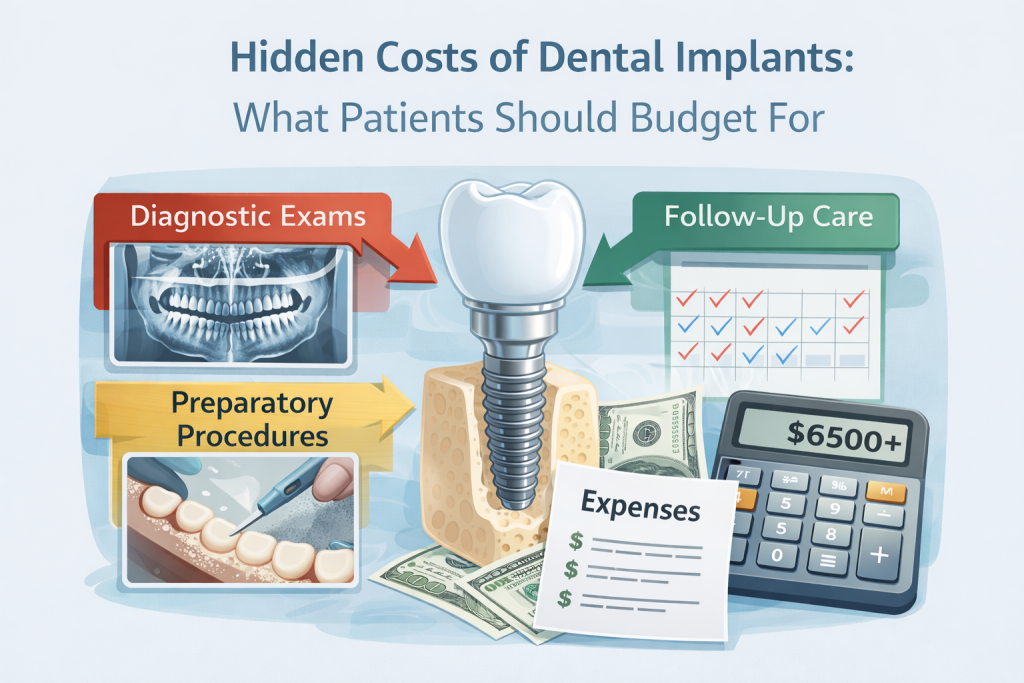
The hidden costs of dental implants often surprise patients who focus only on the advertised price of treatment. While dental implants are widely viewed as a long-term tooth replacement option, the total cost may include additional expenses that are not always clearly explained upfront.
This educational guide explains the hidden costs of dental implants and outlines what patients should realistically budget for when considering implant treatment. Rather than promoting specific services or prices, this article aims to improve cost awareness and financial planning.
Disclaimer: This content is for informational purposes only and does not constitute medical or financial advice. Dental implant costs vary based on individual treatment needs and professional evaluation.
Why the Hidden Costs of Dental Implants Matter for Budgeting
Dental implant pricing is rarely a single, fixed number. Advertised prices may reflect only one part of a multi-stage treatment process.
Understanding what is included—and what may be excluded—from an initial quote helps patients avoid unexpected expenses later.
Understanding the hidden costs of dental implants helps patients plan realistically and avoid unexpected financial stress during treatment.
Hidden Costs of Dental Implants Beyond the Initial Quote
The dental implant process typically begins with a comprehensive evaluation. While some clinics include this step in their pricing, others may charge separately.
Clinical Examination
An initial examination allows dental professionals to assess oral health, bone structure, and treatment feasibility. This step is essential for safe and accurate planning.
Diagnostic Imaging
Advanced imaging may be used to evaluate bone quality and anatomical structures. These diagnostic tools support precise planning but may represent an additional cost.
Many of the hidden costs of dental implants are related to diagnostics, preparatory procedures, and long-term maintenance rather than the implant itself.
Preparatory Procedures That Affect Total Cost
Not all patients are immediate candidates for dental implants. Some require preparatory procedures before implant placement.
Bone-Related Preparations
Patients with insufficient bone volume may need additional treatment to support implant stability. These procedures are typically planned in advance but are not always included in base pricing.
Soft Tissue Considerations
Healthy gum tissue plays a role in implant protection. In some cases, additional soft tissue management may be required.
By recognizing the hidden costs of dental implants early, patients can make more informed and confident treatment decisions.
Implant Components Beyond the Implant Itself
Dental implant treatment involves multiple components, not just the implant fixture placed in the jawbone.
Abutments and Connectors
The abutment connects the implant to the final restoration. Abutment selection may influence overall cost depending on design and customization.
Temporary Restorations
Some treatment plans include temporary teeth during healing phases. These provisional restorations may be listed separately from the final prosthetic.
Laboratory and Fabrication Costs
Implant-supported restorations are often custom-fabricated in dental laboratories. Laboratory work requires specialized equipment and skilled technicians.
Custom fabrication supports fit and function but contributes to total treatment cost.
Short-Term vs Long-Term Cost Awareness
Focusing only on the initial implant price may lead to underestimating the full financial commitment. Understanding hidden costs supports better budgeting and informed decisions.
Evaluating the entire treatment process helps patients compare options more accurately.
Follow-Up Appointments and Ongoing Care Costs
Dental implant treatment does not end with implant placement. Follow-up visits play an important role in monitoring healing, integration, and overall implant performance.
While some practices include routine follow-up appointments in their pricing, others may bill these visits separately.
Post-Placement Evaluations
Follow-up evaluations allow dental professionals to assess tissue response, implant stability, and early integration progress.
These appointments support early identification of potential concerns and contribute to long-term success.
Maintenance and Long-Term Care Expenses
Dental implants require ongoing care similar to natural teeth. Maintenance costs are often overlooked when budgeting for implant treatment.
Professional Cleanings and Monitoring
Regular professional cleanings help maintain gum health around implants. Some patients may require more frequent monitoring based on individual risk factors.
Replacement or Adjustment Over Time
While implants are designed for long-term use, restorative components such as crowns or prosthetics may require adjustment or replacement over time.
These future considerations may affect long-term budgeting.
Insurance Coverage and Common Misconceptions
Insurance coverage can significantly influence how patients perceive implant costs. However, coverage varies widely between plans.
What Insurance May Cover
Some insurance plans contribute to diagnostic exams or restorative components, while implant placement itself may not be fully covered.
Out-of-Pocket Expectations
Understanding coverage limitations helps patients anticipate potential out-of-pocket expenses and avoid unexpected costs.
Financing Options and Their Impact on Total Cost
Financing plans may make implant treatment more accessible, but they can also affect the total amount paid over time.
In-House Payment Plans
Some dental practices offer payment plans that spread costs across several months. Terms and eligibility vary.
Third-Party Financing Providers
External financing options may include interest or fees. Patients are encouraged to review all terms carefully before committing.
Geographic Location and Provider-Related Costs
Dental implant costs may vary based on geographic location. Factors such as operating expenses, local regulations, and demand influence pricing.
Provider experience, technology investment, and treatment scope also contribute to cost variation.
The Myth of “All-Inclusive” Implant Pricing
Some clinics advertise all-inclusive implant pricing. While this may simplify budgeting, it is important to understand what is truly included.
Patients benefit from requesting detailed treatment plans that clearly outline services and components.
Budgeting Beyond the Initial Quote
Accurate budgeting involves considering both immediate and long-term costs. Understanding hidden expenses helps patients plan more confidently.
Comparing treatment options based on scope and value—rather than price alone—supports informed decisions.
Frequently Asked Questions About Hidden Dental Implant Costs
Why do dental implant costs often exceed the initial quote?
Initial quotes may only include implant placement or a single component of treatment. Additional procedures, diagnostic imaging, restorative components, and follow-up care can increase total costs.
Are preparatory procedures always required?
No. Some patients have sufficient bone and healthy tissue for immediate implant placement, while others may require preparatory treatment based on individual anatomy.
Do all clinics include the same services in their pricing?
Pricing structures vary. Some clinics bundle services, while others itemize costs separately. Reviewing written treatment plans helps clarify inclusions.
Can long-term maintenance increase implant costs?
Yes. Ongoing professional care, monitoring, and potential restorative adjustments may contribute to long-term expenses.
Is financing more expensive in the long run?
Financing can increase total cost if interest or fees apply. Understanding financing terms helps patients evaluate affordability.
Patient Budgeting Checklist for Dental Implant Treatment
Patients considering dental implants may benefit from reviewing the following budgeting checklist:
- Confirm whether consultation and diagnostics are included
- Ask about preparatory procedures and their costs
- Review implant components included in the quote
- Clarify temporary restoration options
- Understand laboratory and fabrication fees
- Ask about follow-up and maintenance costs
- Review insurance coverage limitations
- Evaluate financing terms if applicable
Understanding Cost Transparency
Transparent pricing supports informed decision-making. Clear explanations help patients understand what they are paying for and why costs may vary.
Patients are encouraged to ask questions and request detailed treatment breakdowns before committing to care.
Balancing Upfront Costs and Long-Term Value
While dental implants may involve higher upfront costs, evaluating long-term value provides a more complete financial perspective.
Understanding hidden costs allows patients to compare treatment options based on overall scope rather than advertised prices alone.
Key Takeaways on Hidden Implant Costs
Dental implant costs extend beyond the initial price quote. Diagnostic evaluations, preparatory procedures, restorative components, maintenance, and geographic factors all influence total expenses.
Being aware of these factors supports realistic budgeting and confident treatment planning.
Final Thoughts
Hidden costs are a common source of confusion in dental implant treatment. Understanding what patients should budget for helps reduce uncertainty and improve financial preparedness.
Rather than focusing solely on advertised prices, evaluating the complete treatment process supports informed and balanced decisions.
Final Disclaimer: This article is for educational purposes only and does not constitute medical or financial advice. Dental implant costs vary based on individual treatment needs and professional evaluation. Patients should consult qualified dental professionals for personalized guidance.
Related Posts


Leave a Comment
Your comment will be published after it has been approved. Please send comments that do not contain slang words.