How Dental Implants Are Evaluated for Safety and Long-Term Success

How Dental Implants Are Evaluated for Safety and Long-Term Success
Dental implants are widely used as a long-term solution for missing teeth, but their success depends on careful evaluation before, during, and after treatment. Safety and long-term performance are not determined by a single factor; instead, they are assessed through a combination of clinical, biological, and technical considerations.
This educational article explains how dental implants are evaluated for safety and long-term success. Rather than offering treatment advice or recommendations, it provides a general overview of the evaluation principles commonly used in implant dentistry.
Disclaimer: This content is for informational purposes only and does not constitute medical or dental advice. Evaluation methods and outcomes vary based on individual circumstances and professional judgment.
Why Evaluation Matters in Dental Implant Treatment
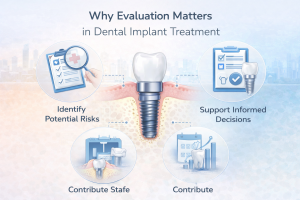
Dental implant treatment is a multi-stage process that requires long-term planning. Proper evaluation helps identify potential risks, supports informed decision-making, and contributes to predictable outcomes.
By understanding how safety and success are evaluated, patients can better appreciate the importance of individualized treatment planning.
Initial Patient Assessment
The evaluation process typically begins with a comprehensive patient assessment. This step focuses on understanding overall health, oral conditions, and factors that may influence healing or implant stability.
Medical and Dental History Review
Medical history provides insight into conditions that may affect bone healing, immune response, or tissue health. Dental history helps identify past treatments, existing restorations, and patterns of oral health.
This information supports risk awareness and personalized planning.
Bone Quality and Jaw Structure Evaluation
Jawbone quality plays a central role in implant stability. Evaluation focuses on bone density, volume, and anatomical structure.
Assessing Bone Density
Bone density influences how securely an implant can be placed and how it integrates over time. Areas with sufficient density may support more predictable outcomes.
Bone Volume and Anatomical Landmarks
Evaluating bone volume helps determine whether additional preparatory procedures may be needed. Anatomical landmarks such as nerves and sinuses are also considered to support safe planning.
Soft Tissue Health and Implant Safety
Healthy gum tissue contributes to implant protection and long-term stability. Soft tissue evaluation focuses on thickness, contour, and inflammation levels.
Healthy soft tissue forms a protective barrier around implants, reducing the risk of irritation and infection.
Occlusion and Bite Analysis
Bite forces affect how implants perform over time. Evaluation includes analyzing how teeth come together during normal function.
Balanced bite alignment helps distribute forces evenly and reduces stress on implant-supported restorations.
Risk Assessment and Patient-Specific Factors
Implant safety evaluations consider individual risk factors rather than applying a one-size-fits-all approach.
Common factors reviewed during evaluation include:
- Bone quality and quantity
- Soft tissue health
- Overall health status
- Oral hygiene habits
Identifying these factors early supports safer and more predictable outcomes.
Short-Term Safety vs Long-Term Success
Immediate surgical safety and long-term implant success are evaluated differently. Short-term considerations focus on healing and tissue response, while long-term success depends on stability, function, and maintenance.
Understanding this distinction helps set realistic expectations for implant treatment.
Imaging and Diagnostic Tools Used in Implant Evaluation
Diagnostic imaging plays a critical role in evaluating dental implant safety and long-term success. Modern imaging technologies provide detailed insights into bone structure and surrounding anatomy.
Three-Dimensional Imaging
Three-dimensional imaging allows clinicians to assess bone contours, density, and spatial relationships more accurately than traditional two-dimensional methods.
This level of visualization supports informed planning and helps identify anatomical considerations before implant placement.
The Role of Technology in Safety Assessment
Technology-assisted planning tools support consistent and predictable implant evaluation. Digital workflows integrate imaging, virtual planning, and restorative considerations.
Virtual Planning and Simulation
Virtual planning software enables simulation of implant placement under ideal conditions. This process allows potential challenges to be identified and addressed before clinical procedures.
Technology enhances safety by improving preparation rather than replacing professional judgment.
Implant Materials and Biocompatibility
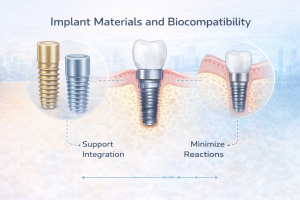
Material selection is an important aspect of implant evaluation. Dental implants are designed to integrate with bone and support long-term stability.
Material Properties and Tissue Response
Biocompatible materials are selected to support integration and minimize adverse tissue reactions. Evaluation considers how materials interact with bone and soft tissue over time.
Material choice is guided by clinical needs rather than cost considerations alone.
Evaluating Implant Stability Over Time
Implant evaluation does not end with placement. Long-term success is monitored through regular follow-up and assessment.
Primary and Secondary Stability
Primary stability refers to initial mechanical fixation, while secondary stability develops as bone integrates with the implant surface.
Monitoring these phases helps assess whether healing is progressing as expected.
Monitoring Soft Tissue Response
Soft tissue health continues to play a role in long-term implant safety. Evaluation includes observing tissue contour, inflammation levels, and hygiene response.
Healthy soft tissue supports protection of the implant interface.
Maintenance and Professional Follow-Up
Long-term implant success depends on ongoing professional evaluation. Follow-up appointments allow early detection of potential concerns.
Maintenance strategies focus on preserving tissue health and supporting stable function.
Patient Participation in Long-Term Evaluation
Patients contribute to implant success through daily care and adherence to professional recommendations.
Education and awareness support effective collaboration between patients and dental professionals.
Understanding Evaluation as an Ongoing Process
Dental implant evaluation is continuous rather than limited to a single appointment. Safety and success are assessed over time through observation, monitoring, and adaptation.
This ongoing approach supports predictable outcomes and long-term stability.
Frequently Asked Questions About Dental Implant Safety Evaluation
How is dental implant safety evaluated?
Dental implant safety is evaluated through a combination of medical history review, oral examination, imaging studies, and long-term monitoring. These steps help identify potential risks and support predictable outcomes.
Do all patients undergo the same evaluation process?
No. Evaluation is individualized based on health status, bone quality, oral conditions, and treatment goals. Each patient’s assessment is tailored to their specific needs.
Is long-term success evaluated differently than short-term safety?
Yes. Short-term evaluation focuses on healing and tissue response, while long-term success is assessed through stability, function, and maintenance over time.
Can dental implants be considered safe long term?
Dental implants have a long history of clinical use. When properly evaluated and maintained, they are widely regarded as a predictable tooth replacement option.
Key Factors Used to Evaluate Long-Term Implant Success
Long-term implant success is assessed using multiple criteria rather than a single measurement. These factors include:
- Stable integration with surrounding bone
- Healthy soft tissue response
- Functional comfort during daily use
- Absence of persistent inflammation or discomfort
- Effective long-term maintenance
Ongoing evaluation helps ensure that implants continue to function as intended.
The Importance of Follow-Up and Monitoring
Regular follow-up appointments play a critical role in evaluating implant safety and performance. These visits allow dental professionals to monitor healing progress and identify potential concerns early.
Monitoring is especially important as oral conditions, health status, and habits may change over time.
Patient Awareness and Education
Patient education is a key component of long-term implant success. Understanding how implants are evaluated helps patients recognize the importance of follow-up care and daily oral hygiene.
Informed patients are better equipped to participate in maintaining their oral health.
Balancing Technology and Clinical Judgment
While advanced imaging and digital tools enhance evaluation accuracy, clinical judgment remains essential. Technology supports decision-making but does not replace professional expertise.
Effective evaluation combines technical tools with experience and individualized care.
Summary of Safety and Success Evaluation
Dental implant evaluation focuses on safety, stability, and long-term performance. From initial assessment to ongoing monitoring, multiple factors contribute to predictable outcomes.
Viewing evaluation as a continuous process helps ensure implants remain functional and comfortable over time.
Final Thoughts
Understanding how dental implants are evaluated for safety and long-term success provides insight into the planning and care involved in implant dentistry.
Rather than a single decision point, evaluation is an ongoing process that supports both immediate safety and lasting results.
Final Disclaimer: This article is intended for educational purposes only and does not replace professional medical or dental advice. Individual evaluation methods and outcomes vary. Patients should consult a licensed dental professional for personalized guidance.
Related Posts


Leave a Comment
Your comment will be published after it has been approved. Please send comments that do not contain slang words.