What Helps Dental Implants Heal Faster? Evidence-Based Recovery Factors
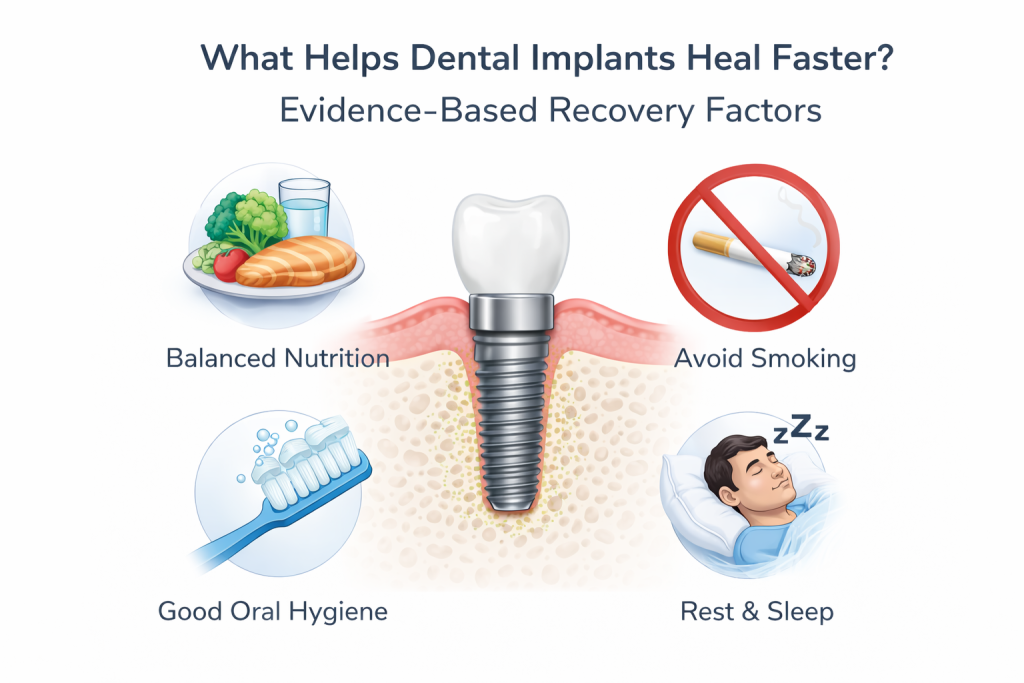
What Helps Dental Implants Heal Faster? Evidence-Based Recovery Factors
Healing after dental implant surgery is a complex biological process influenced by multiple factors. While dental implants are designed to integrate with the jawbone over time, recovery speed and comfort can vary significantly from one patient to another.
This educational guide explores what helps dental implants heal faster by examining evidence-based recovery factors that support tissue repair, bone integration, and overall oral health. Rather than offering medical advice or guarantees, this article focuses on scientifically recognized principles that influence healing outcomes.
Disclaimer: This content is for informational purposes only and does not constitute medical or dental advice. Individual healing experiences vary. Patients should always follow the guidance of their licensed dental professional.
Understanding the Dental Implant Healing Process

Dental implant healing occurs in stages and involves both hard and soft tissue recovery. The most critical phase is osseointegration, during which the implant bonds with the surrounding jawbone.
While this process cannot be rushed, certain biological and behavioral factors may support a smoother and more predictable recovery.
Healing timelines depend on:
- Bone quality and density
- Soft tissue response
- Overall health status
- Post-surgical care habits
Why Healing Speed Varies Between Patients
It is common for patients to compare recovery experiences, but healing speed is highly individual. Factors such as age, metabolism, immune response, and oral hygiene habits all influence how the body responds after implant placement.
Rather than focusing on how fast healing occurs, dental professionals emphasize creating optimal conditions for stable and complication-free recovery.
Bone Quality and Its Role in Faster Implant Healing
Healthy jawbone is essential for implant stability and long-term success. Bone density affects how quickly and securely the implant integrates.
Primary Stability and Early Healing
Primary stability refers to the initial mechanical stability of the implant at the time of placement. Higher bone density often contributes to improved primary stability, which supports early healing phases.
Patients with adequate bone volume may experience fewer delays during the recovery process.
Soft Tissue Healing Around Dental Implants
Soft tissue healing plays a crucial role in protecting the implant site from bacteria and irritation. Healthy gums create a seal around the implant, supporting both comfort and long-term outcomes.
Gum Health and Inflammation Control
Minimizing inflammation during early healing helps reduce discomfort and supports tissue repair. Excessive swelling or prolonged inflammation may signal delayed healing.
Maintaining gentle oral hygiene and avoiding trauma to the surgical site are commonly recommended during this phase.
The Importance of Blood Supply in Implant Recovery
Adequate blood flow delivers oxygen and nutrients essential for healing. Surgical techniques that preserve surrounding tissue and blood vessels support natural recovery processes.
Systemic health conditions that affect circulation may influence healing speed and should be discussed with a dental professional during treatment planning.
Immune System Function and Healing Efficiency
The immune system plays a central role in controlling inflammation and preventing infection after dental implant surgery.
Factors that may influence immune response include:
- Chronic health conditions
- Stress levels
- Sleep quality
- Nutritional status
Supporting immune health may contribute to a more comfortable and stable healing experience.
Early Healing vs Long-Term Integration
Early healing focuses on tissue closure and inflammation control, while long-term integration involves bone remodeling and implant stability.
While early comfort is important, long-term success depends on maintaining favorable conditions throughout the entire healing period.
Understanding this distinction helps set realistic expectations and encourages patience during recovery.
Nutrition and Hydration: How They Support Implant Healing
Nutrition plays a fundamental role in tissue repair and bone remodeling. After dental implant surgery, the body requires sufficient nutrients to support healing processes.
Key Nutrients Involved in Healing
Several nutrients are known to support wound healing and bone health:
- Protein: Essential for tissue repair and immune function
- Vitamin C: Supports collagen formation and soft tissue healing
- Vitamin D: Plays a role in calcium absorption and bone metabolism
- Calcium: Contributes to bone strength and remodeling
Balanced nutrition supports overall recovery, though supplements should only be used under professional guidance.
The Role of Hydration
Adequate hydration supports circulation, nutrient delivery, and waste removal during healing. Dehydration may contribute to fatigue and delayed recovery.
Smoking and Its Impact on Implant Healing
Smoking is widely recognized as a factor that can negatively influence healing after dental implant surgery. Nicotine and other substances in tobacco products may affect blood flow and immune response.
Research consistently associates smoking with:
- Reduced blood supply to healing tissues
- Increased inflammation
- Higher risk of implant-related complications
Patients are often advised to avoid smoking during the healing period to support optimal outcomes.
Alcohol Consumption and Recovery Considerations
Alcohol consumption may interfere with healing by affecting immune response, hydration levels, and sleep quality.
During early recovery, limiting alcohol intake may help reduce inflammation and support tissue repair.
Dental professionals typically recommend moderation or temporary avoidance during the initial healing phase.
Physical Activity and Rest Balance
Physical activity influences circulation and overall health, but excessive exertion during early healing may increase swelling or discomfort.
Rest During Early Healing
Rest allows the body to allocate energy toward tissue repair. In the first days following implant placement, minimizing strenuous activity may support comfort and healing.
Gradual Return to Normal Activity
As healing progresses, light activity may be resumed based on individual comfort levels and professional recommendations.
Medications and Their Influence on Healing
Certain medications may influence healing speed and tissue response after dental implant surgery.
Common Medication Considerations
- Anti-inflammatory medications
- Antibiotics prescribed for infection prevention
- Medications affecting bone metabolism
Patients should inform their dental provider of all medications and supplements they are taking to ensure coordinated care.
Oral Hygiene Habits That Support Faster Healing
Maintaining appropriate oral hygiene is essential for protecting the implant site from bacterial irritation.
Gentle Cleaning Techniques
During early healing, gentle cleaning around the surgical area helps prevent plaque accumulation without disrupting tissues.
Avoiding Trauma to the Implant Site
Patients are commonly advised to avoid touching the implant site with fingers or objects and to follow professional guidance regarding rinsing and brushing.
Stress, Sleep, and Healing Efficiency
Stress and sleep quality influence immune function and tissue repair. Chronic stress may contribute to prolonged inflammation, while adequate sleep supports recovery.
Creating a supportive recovery environment—including proper rest and stress management—may help optimize healing conditions.
Short-Term Comfort vs Long-Term Stability
While reducing discomfort is important, healing success should be evaluated in terms of long-term implant stability rather than immediate symptom relief.
Supporting biological healing processes helps reduce the risk of complications and contributes to predictable outcomes over time.
Common Myths About Faster Dental Implant Healing
Many patients search for ways to speed up dental implant healing, but misinformation can lead to unrealistic expectations. Understanding what is supported by evidence—and what is not—helps patients make informed decisions.
Myth: Dental Implants Can Heal Instantly
Dental implant healing cannot be instant. Osseointegration requires time, as bone tissue must gradually adapt and bond to the implant surface.
Myth: Supplements Alone Can Speed Healing
While proper nutrition supports healing, supplements alone cannot override biological processes. Healing depends on multiple interacting factors rather than a single solution.
Myth: No Discomfort Means Complete Healing
Reduced discomfort does not always indicate full integration. Bone remodeling may continue long after surface symptoms improve.
How Dental Professionals Support Optimal Healing
Dental professionals play a key role in guiding recovery and monitoring healing progress. Their recommendations are based on clinical experience and evidence-based protocols.
Treatment Planning and Surgical Technique
Careful treatment planning and minimally invasive techniques may reduce trauma and support smoother healing.
Post-Surgical Monitoring
Follow-up visits allow early identification of potential issues and adjustments to care strategies when needed.
Frequently Asked Questions About Dental Implant Healing
What helps dental implants heal faster?
Factors such as good oral hygiene, balanced nutrition, avoiding smoking, proper rest, and following professional guidance support optimal healing conditions.
Can age affect healing speed?
Age alone does not determine healing speed. Overall health, bone quality, and immune response are more influential factors.
Is swelling normal after implant surgery?
Some swelling is common during early healing. Persistent or worsening symptoms should be evaluated by a dental professional.
When should I contact my dentist during recovery?
Patients should contact their provider if they experience unusual pain, prolonged swelling, signs of infection, or concerns about healing progress.
Recovery Support Checklist for Implant Patients
The following checklist summarizes key recovery-supporting principles:
- Follow all post-operative instructions provided by your dental professional
- Maintain gentle but consistent oral hygiene
- Eat a balanced, nutrient-rich diet
- Stay well hydrated
- Avoid smoking and excessive alcohol consumption
- Allow sufficient rest during early healing
- Attend scheduled follow-up appointments
Long-Term Perspective on Healing and Implant Success
Dental implant healing should be viewed as a long-term process rather than a short-term event. Early recovery sets the foundation for long-term stability and function.
By focusing on evidence-based recovery factors, patients can support predictable healing and reduce the likelihood of complications.
Final Thoughts
Understanding what helps dental implants heal faster involves recognizing the biological, behavioral, and health-related factors that influence recovery. While healing cannot be rushed, creating supportive conditions allows the body to heal efficiently and safely.
Final Disclaimer: This article is intended for educational purposes only and does not replace professional medical or dental advice. Individual recovery experiences vary. Patients should consult a licensed dental professional for personalized guidance.
Related Posts
Leave a Comment
Your comment will be published after it has been approved. Please send comments that do not contain slang words.