Why Dental Implant Costs Vary So Much: Key Pricing Factors Explained
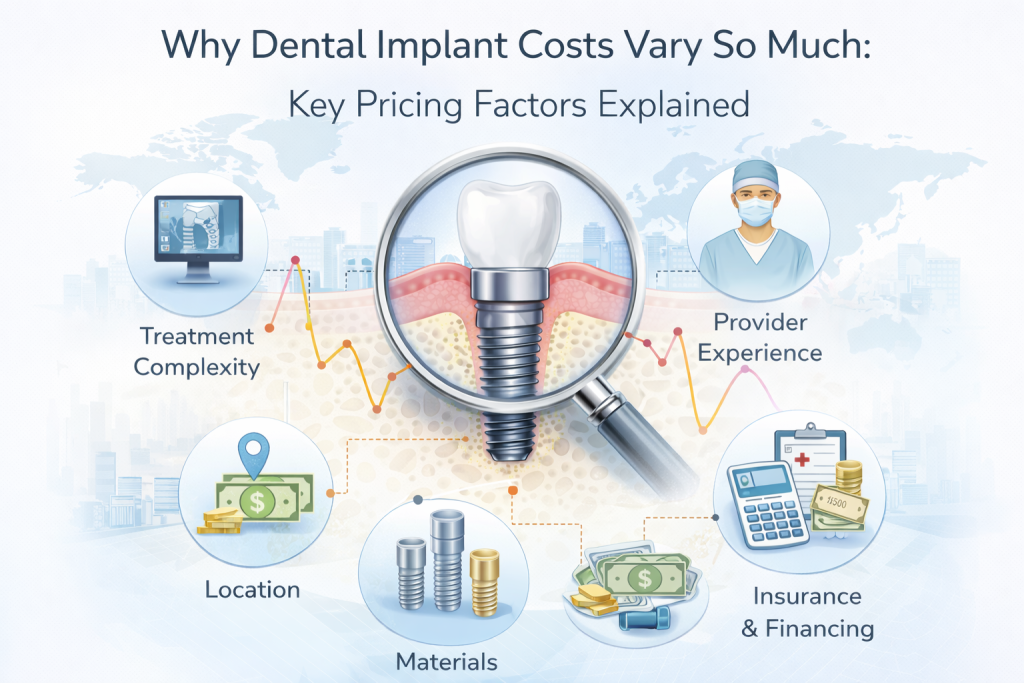
Why Dental Implant Costs Vary So Much: Key Pricing Factors Explained
Dental implant costs can vary significantly from one patient to another, even within the same country or city. Many patients researching implant treatment notice wide price ranges and naturally wonder why these differences exist.
This educational guide explains why dental implant costs vary so much by examining the key pricing factors that influence treatment expenses. Rather than focusing on exact prices, this article aims to help patients understand the elements that shape overall cost.
Disclaimer: This content is for informational purposes only and does not constitute medical or financial advice. Treatment needs and costs vary based on individual circumstances. Patients should consult licensed dental professionals for personalized guidance.
Understanding Dental Implant Pricing
Dental implant pricing is not standardized like over-the-counter medical products. Each treatment plan is customized, taking into account anatomical, clinical, and procedural factors.
Unlike a single procedure, dental implant treatment often includes multiple steps, evaluations, and components. These variables contribute to differences in overall cost.
The Role of Individual Treatment Complexity
One of the primary reasons dental implant costs vary is treatment complexity. No two patients have identical oral health conditions.
Bone Quality and Volume
Patients with sufficient jawbone volume may require fewer preparatory procedures. In contrast, those with bone loss may need additional interventions that influence total treatment cost.
Gum Health and Existing Conditions
Healthy gum tissue supports smoother implant placement. Patients with gum disease or inflammation may require preliminary treatment before implants can be placed.
Number of Implants and Type of Restoration
The number of implants required plays a significant role in overall cost variation.
Single-Tooth vs Multi-Tooth Solutions
Replacing a single tooth typically involves fewer components than full-arch or full-mouth restorations. As treatment scope increases, so does complexity and cost.
Type of Prosthetic Restoration
Implants can support crowns, bridges, or full-arch prosthetics. Each restoration type involves different materials, laboratory processes, and technical requirements.
Diagnostic Technology and Treatment Planning
Advanced diagnostic tools contribute to precise planning but may also influence pricing.
Imaging and Digital Planning
Three-dimensional imaging and digital planning technologies allow dental professionals to assess bone structure and implant positioning accurately. These tools support predictable outcomes but may be reflected in treatment costs.
Clinics that invest in modern diagnostic equipment often emphasize safety, accuracy, and long-term success.
Surgical Expertise and Provider Experience
The experience and training of the dental professional performing the implant procedure can also affect cost.
Clinical Skill and Specialized Training
Dental professionals with advanced training in implant dentistry may charge higher fees due to their expertise, experience, and ability to manage complex cases.
Patients often consider provider experience an important factor when evaluating treatment options.
Geographic Location and Regional Cost Differences
Dental implant costs may vary based on geographic location. Regional factors such as operating expenses, local regulations, and cost of living influence pricing.
Urban areas or regions with higher operating costs may reflect higher treatment fees compared to smaller communities.
Materials Used in Implant Treatment
The materials selected for implants and restorations can influence cost variation.
Implant Materials
Dental implants are commonly made from biocompatible materials designed for long-term integration. Material selection is based on clinical needs rather than price alone.
Restorative Materials
Crowns and prosthetics may be fabricated using different materials, each with unique durability and aesthetic properties.
Laboratory Fees and Custom Fabrication
Dental implant restorations are often custom-made in dental laboratories. Laboratory processes involve skilled technicians, specialized equipment, and quality control.
Custom fabrication supports fit and function but contributes to overall treatment cost.
Short-Term Costs vs Long-Term Value
While initial implant costs may appear higher compared to other tooth replacement options, long-term considerations often influence patient decisions.
Understanding pricing factors helps patients evaluate treatment value rather than focusing solely on upfront cost.
Why Price Comparisons Can Be Misleading
Comparing dental implant prices without considering treatment scope may lead to confusion. Quoted prices may or may not include diagnostic exams, follow-up care, or restorative components.
Clear communication with dental providers helps patients understand what is included in treatment plans.
Included Costs vs Additional Expenses
One reason dental implant costs can appear inconsistent is that not all price quotes include the same services. Understanding what is typically included—and what may be considered additional—helps clarify pricing differences.
Commonly Included Components
Some treatment plans include multiple services bundled into a single fee, such as:
- Initial consultation and clinical evaluation
- Diagnostic imaging and treatment planning
- Implant placement procedure
- Basic follow-up appointments
Bundled pricing may simplify planning but can vary significantly between providers.
Potential Additional Expenses
Other services may be listed separately, depending on individual needs:
- Bone grafting or sinus lift procedures
- Temporary restorations
- Upgraded restorative materials
- Extended follow-up care
Understanding these distinctions helps patients compare treatment plans more accurately.
Insurance Coverage and Cost Perception
Dental insurance coverage can influence how patients perceive implant costs. Coverage varies widely between plans and often applies only to specific components of treatment.
Some insurance plans may contribute to diagnostic exams or restorative elements, while implant placement itself may not be fully covered.
Clear communication with insurance providers and dental offices helps avoid misunderstandings related to expected out-of-pocket expenses.
Financing Options and Their Effect on Total Cost
Financing options can make dental implant treatment more accessible but may also affect overall cost when interest or fees are involved.
Payment Plans
Some dental practices offer in-house payment plans that spread costs over time. These arrangements vary in structure and terms.
Third-Party Financing
External financing providers may offer installment options. Patients are encouraged to review terms carefully to understand long-term financial implications.
Why Low-Cost Implant Offers Can Be Misleading
Advertisements promoting unusually low implant prices often attract attention, but these offers may not reflect the full scope of treatment.
Low advertised prices may apply to limited components or exclude necessary preparatory procedures.
Patients benefit from reviewing detailed treatment plans rather than relying solely on promotional pricing.
Technology, Equipment, and Cost Differences
Dental practices that invest in advanced technology may reflect higher operational costs. These investments often support precision, safety, and predictability.
Digital Workflow and Planning Tools
Modern planning systems allow for detailed visualization and customized implant placement. While these tools enhance outcomes, they may influence overall pricing.
Surgical Environment and Safety Standards
Maintaining high safety and sterilization standards requires ongoing investment, which can contribute to cost variation between providers.
Time Commitment and Treatment Duration
Dental implant treatment often spans several months, involving multiple appointments and healing phases.
Extended treatment timelines may include additional monitoring and professional care, which can influence overall cost.
Communication and Transparency in Pricing
Transparent communication plays an important role in patient satisfaction. Clear explanations of treatment components help patients understand cost differences.
Patients are encouraged to ask detailed questions and request written treatment plans when evaluating options.
Short-Term Savings vs Long-Term Considerations
When evaluating dental implant costs, patients often consider both immediate affordability and long-term implications.
Understanding pricing factors supports informed decisions that align with individual health goals and expectations.
Frequently Asked Questions About Dental Implant Costs
Why do dental implant costs vary so much?
Dental implant costs vary due to differences in treatment complexity, materials used, provider experience, geographic location, and whether additional procedures are required.
Is a higher-priced implant always better?
Higher cost does not automatically guarantee better outcomes. Pricing often reflects experience, technology, and comprehensive care rather than implant quality alone.
Do all implant quotes include the same services?
No. Some quotes include diagnostic exams, follow-up visits, and restorations, while others may list these components separately.
Can dental insurance reduce implant costs?
Insurance coverage varies by plan. Some plans contribute to specific parts of treatment, such as exams or restorations, but may not cover implant placement.
Are low-cost implant offers risky?
Low advertised prices may not reflect the full scope of care. Reviewing detailed treatment plans helps patients understand actual costs.
Patient Checklist for Evaluating Dental Implant Costs
Before committing to treatment, patients may find it helpful to review the following checklist:
- Request a written treatment plan outlining all included services
- Ask whether diagnostic exams and follow-up visits are included
- Clarify if preparatory procedures are required
- Review restorative material options
- Understand financing terms if applicable
- Discuss long-term maintenance expectations
Key Takeaways on Dental Implant Pricing
Dental implant costs are influenced by a combination of clinical, technical, and logistical factors. Understanding these variables helps patients interpret price differences more accurately.
Rather than focusing solely on upfront cost, evaluating overall treatment value—including safety, predictability, and long-term outcomes—supports informed decision-making.
Why Transparent Pricing Matters
Transparent pricing supports trust between patients and dental providers. Clear explanations of treatment components reduce uncertainty and help align expectations.
Patients are encouraged to ask questions and seek clarification when comparing treatment options.
Final Thoughts
Dental implant costs vary because each treatment plan is tailored to individual needs. Factors such as anatomy, health status, materials, technology, and professional expertise all contribute to pricing differences.
By understanding key pricing factors, patients can approach dental implant treatment with greater confidence and clarity.
Final Disclaimer: This article is intended for educational purposes only and does not constitute medical or financial advice. Individual treatment needs and costs vary. Patients should consult licensed dental professionals for personalized recommendations.
Related Posts


Leave a Comment
Your comment will be published after it has been approved. Please send comments that do not contain slang words.